Development PFI-Rail (Port Fuel Injection)

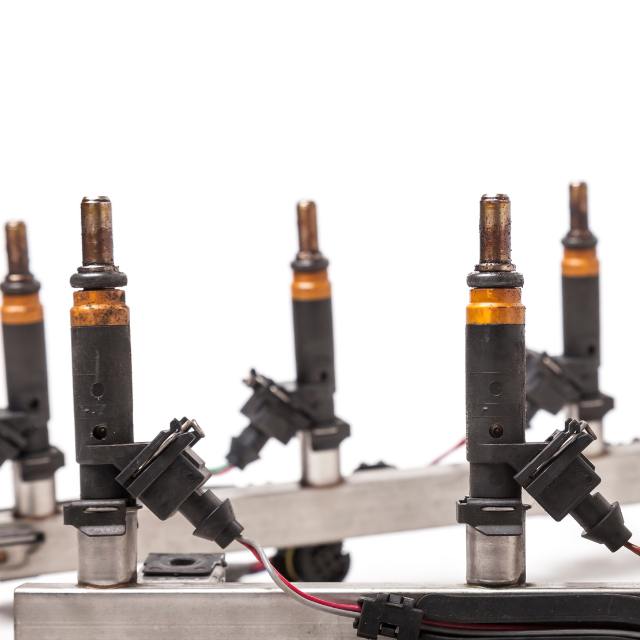
PFI-Rails (Port Fuel Injection)

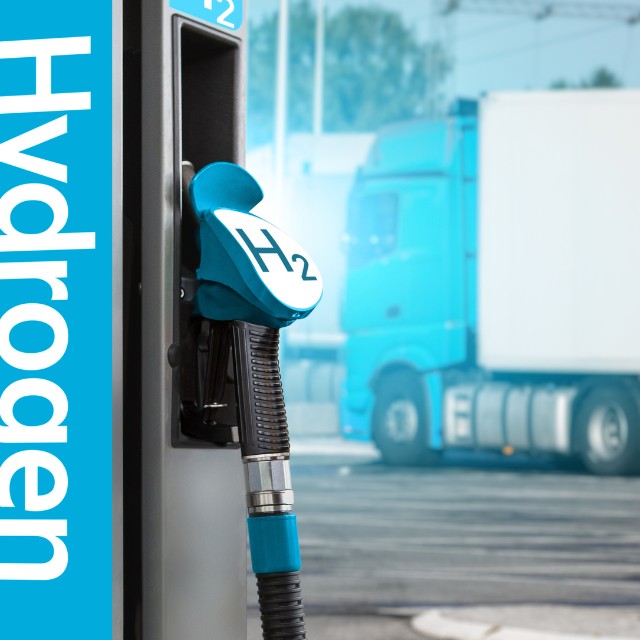
Development of a functional prototype (up to B-sample maturity) for a hydrogen fuel rail for a heavy-duty internal combustion engine. The fuel injection system was based on Port Fuel Injection (PFI).

  • Identification of the key requirements derived from the specific application as well as from regulatory constraints
  • Definition of:
    • a suitable layout and overall design within the available installation space
    • manufacturing processes for individual components and the assembled fuel rail, taking into account specific requirements resulting from the use in a hydrogen application
    • achievable tolerances for connection interfaces and for the overall assembly
    • feasible residual contamination (cleanliness) requirements
  • Definition of a design concept based on injector interfaces (“injector receptacles”)
  • Design and preparation of manufacturing documentation for different volume variants and injector configurations
  • Execution of brazing trials to determine the required process parameters
  • Participation in D-FMEA and P-FMEA activities to validate and safeguard both design and manufacturing process
  • Design and preparation of manufacturing documentation for test setups (validation), tools, and fixtures
  • Continuous coordination with the OEM, prototype manufacturing, suppliers, and other project stakeholders
  • Project documentation in accordance with IATF requirements up to B-sample maturity
Requirements management tool

Development of an online-based tool for managing and tracking requirements in engineering projects. The system offers the option of registering as a user and creating projects. Other users can be invited to your own project and assigned different roles.

The requirements managed with the tool are generally assigned to categories. There are templates for different types of projects that can also be used as a checklist.

Depending on the user role, new requirements can be created or existing ones changed; it is also possible to comment on requirements.

The management of requirements is list-based and has a hierarchical structure. This means that a requirement can be derived from a higher-level requirement. The system can visualize these dependencies as a diagram.

Each requirement can be assigned various attributes that can be used to classify and evaluate the requirements.

It is possible to revert to an older version of the project requirements at any time; the tool offers a 1:1 comparison of two different versions with the respective changes identified.

Project management guideline and workshops

Creation of a project management guideline (manual) for the processing of orders in the field of development and design in mechanical engineering. The manual served to convey basic information on different project management methods as well as a selection of methods tailored to the company for implementation in the individual orders. Components included communication in the project, contract management, data storage and claim management. Recurring training courses based on the project management manual were carried out over a long period of time. Both training courses and the project management manual were aimed at both project managers and project employees.

External Engineering Interface Coordination

For a customer in the automotive sector, an external team of designers (located in India) was set up to relieve the design department. This involved

  • Clarifying the technical interfaces for data export and import from Teamcenter/Siemens NX
  • Developing the workflows and forms for assigning work packages
  • The external designers were also provided with organizational and technical support, as well as
  • Quality control of the work results and
  • Project controlling based on the individual work packages.

The project team was international and the technical and organizational coordination took place in English.

Product Owner Engineering, Hydrogen applications

Building, supporting and developing a customer-side agile team (Scrum) in the role of Product Owner Engineering. The project content handled was predominantly in the area of ​​hydrogen applications (gaseous, pressure up to approx. 1,000 bar).

In addition to the Product Owner Engineering, the team was made up of the following team members: Scrum Master, Developer (development engineers), validation engineers and, for individual order processing, also production (prototyping for A samples and B samples), measurement technology and quality management.

The project was carried out within the framework of an IATF-compliant product development plan for the individual components or systems. Project contents were e.g. b.

  • Development of tube dimensions and interfaces (swageheads and spigot nuts) for hydrogen applications
  • Engineering design of hydrogen distribution systems (e.g. for a hydrogen filling station, various multi-element gas containers (MEGC), tank systems for vehicles) for stationary and mobile applications
  • Technical and organizational support for the industrialization of a hydrogen rail (port fuel injection and direct injection) for a mobile application
  • Definition of the scope of work for individual projects; Maintaining the product backlog and product development plans in the individual sample phases
  • Supporting sales in assessing incoming inquiries regarding requirements and expected development efforts