Development of a hydrogen DI rail (direct injection)

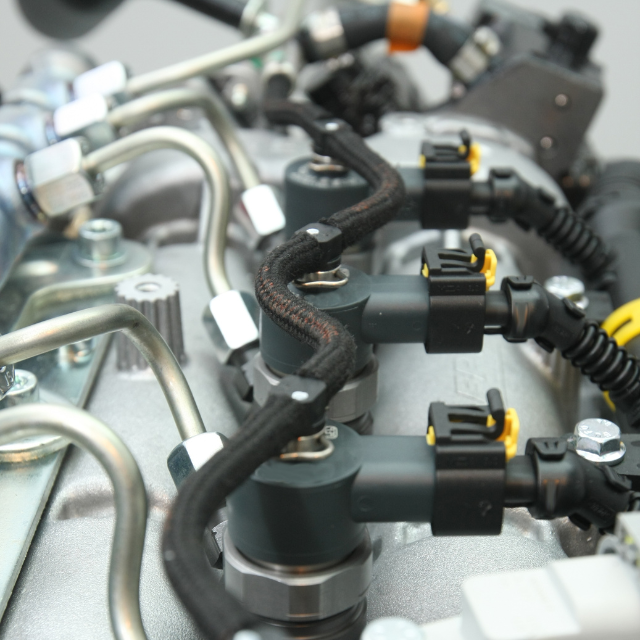
Ein DI-Rail mit Injektorleitungen

Development of a functional prototype for a direct injection (DI) hydrogen fuel rail for a heavy-duty internal combustion engine.

  • Identification of the key requirements derived from the specific application as well as from regulatory constraints
  • Definition of a suitable layout and overall design within the available installation space
  • Definition of a design concept based on a target volume
  • Design and preparation of manufacturing documentation for the fuel rail, injector lines, and feed line
  • Participation in D-FMEA and P-FMEA activities to validate and safeguard both the design and the manufacturing process
  • Design and preparation of manufacturing documentation for test setups (validation), tools, and fixtures
  • Continuous coordination with the OEM, prototype manufacturing, suppliers, and other project stakeholders
  • Project documentation aligned with IATF requirements up to initial functional prototypes
Development PFI-Rail (Port Fuel Injection)

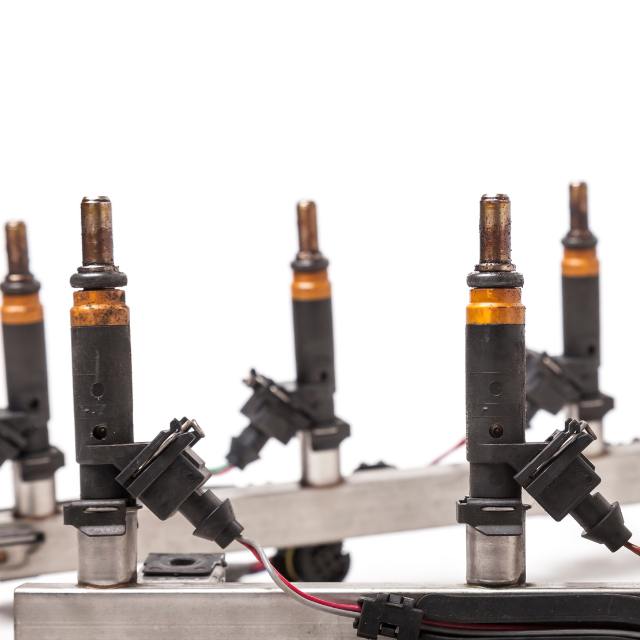
PFI-Rails (Port Fuel Injection)

Development of a functional prototype (up to B-sample maturity) for a hydrogen fuel rail for a heavy-duty internal combustion engine. The fuel injection system was based on Port Fuel Injection (PFI).

  • Identification of the key requirements derived from the specific application as well as from regulatory constraints
  • Definition of:
    • a suitable layout and overall design within the available installation space
    • manufacturing processes for individual components and the assembled fuel rail, taking into account specific requirements resulting from the use in a hydrogen application
    • achievable tolerances for connection interfaces and for the overall assembly
    • feasible residual contamination (cleanliness) requirements
  • Definition of a design concept based on injector interfaces (“injector receptacles”)
  • Design and preparation of manufacturing documentation for different volume variants and injector configurations
  • Execution of brazing trials to determine the required process parameters
  • Participation in D-FMEA and P-FMEA activities to validate and safeguard both design and manufacturing process
  • Design and preparation of manufacturing documentation for test setups (validation), tools, and fixtures
  • Continuous coordination with the OEM, prototype manufacturing, suppliers, and other project stakeholders
  • Project documentation in accordance with IATF requirements up to B-sample maturity

Container adjusting mechanism

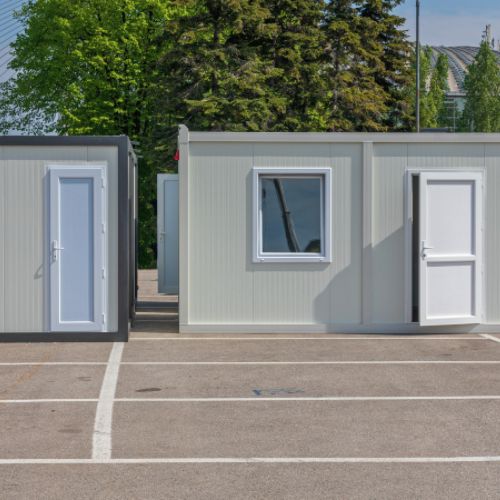
The customer had a modular system for containers that could be connected to each other (coupled) and used in various environments.

These containers were usually brought to their destination by truck and then aligned with one another using a lifting system integrated in the vehicle so that the connection points could be positioned relative to one another and the coupling could be carried out. This coupling could be made for several containers arranged next to each other.

For a special application, the load capacity of the existing system was increased while the weight was reduced at the same time, and a positioning system was designed that made it possible to lift and align containers manually, i.e. without an external energy source. This means that instead of a transport vehicle fully equipped with a lifting system, the container could now simply be placed at its approximate position and the positioning could be carried out independently of the vehicle.